For most of the last few years, "using AI" meant one very specific ritual: open a chat window, type a question, read an answer, copy it somewhere useful. The model was a brilliant conversationalist that lived entirely inside the box you typed into. It could tell you how to write a script, but it couldn't run it. It could draft an email, but it couldn't send it.
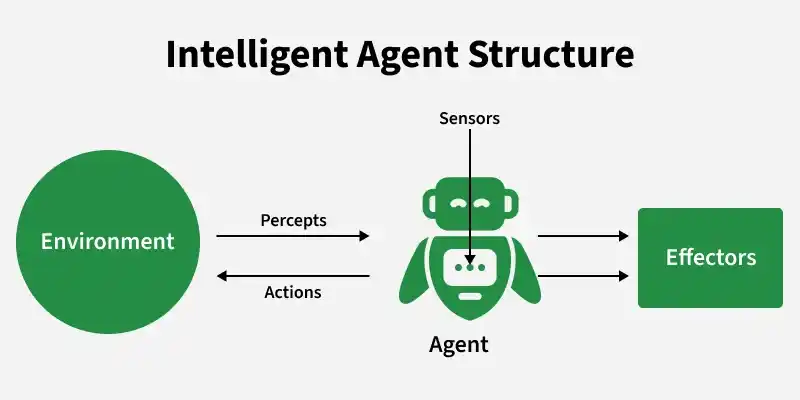
That box is breaking open. Across 2025 and into 2026, the conversation among AI researchers, product teams, and enterprises has shifted from "how good are the answers" to "how much can the system actually get done on its own." People have started calling this shift the agentic era — and however marketing-flavored that phrase sounds, the underlying change is real.
From a Conversation to a Task
The core difference between a chatbot and an agent is small to describe and enormous in effect: a chatbot responds to a prompt, an agent pursues a goal.
Give a chatbot a question, and it answers once. Give an agent a goal — "clean up this spreadsheet," "find three apartments that fit this budget," "fix the failing tests in this repo" — and it breaks that goal into steps, decides which tools it needs, calls those tools, checks whether the result actually worked, and tries again if it didn't. It runs a loop: perceive the current state, plan the next step, act, observe what changed, repeat. Chatbots don't have that loop. Agents are built around it.
What Made This Possible Now
None of the individual pieces are new. Tool use, multi-step planning, and looping agents have all existed in research papers for years. What changed recently is that three things finally lined up at once:
- Reasoning got more reliable. Newer models are simply better at holding a multi-step plan in their head without losing the thread — which used to be the main reason early agent demos fell apart after two or three steps.
- Tools got standardized. Instead of every company wiring up its own bespoke integration between a model and, say, a calendar or a codebase, common protocols now let an agent plug into dozens of tools with minimal custom glue code.
- Interfaces got more permissive. Agents that can browse a real website, operate a real computer, or edit a real file are only useful if something is willing to let them click, type, and save — and increasingly, that gate is opening.
Put those three together, and the demo-ware agents of two years ago turned into coding agents that write and test features on their own, browser agents that fill out forms and book things, and orchestration layers that hand a task to whichever specialized agent is best suited for it.
The Part That Doesn't Get a Keynote Slide: Trust
Here's the tension nobody solves with a bigger model: the more autonomy you hand something, the more expensive its mistakes get. A chatbot that gives you a wrong answer wastes your time. An agent that has your calendar, your inbox, and your production database wired up can do real damage before anyone notices.
That's why the more interesting frontier right now isn't raw capability — it's supervision. What permissions should an agent have by default? Which actions need a human to confirm before they happen? How do you audit a chain of a hundred autonomous steps to figure out where it went wrong? The teams getting real value out of agents right now aren't the ones with the most ambitious agents; they're the ones with the clearest answers to those questions — narrow scopes, confirmation steps for anything irreversible, and logs good enough to actually debug when something breaks.
What It Actually Means for the Rest of Us
If the last few years of software were about learning to prompt well, the next stretch is about learning to delegate well — a different skill. It looks less like "asking a good question" and more like:
- Specifying a goal precisely enough that an autonomous system can't misinterpret it in an expensive way
- Deciding how much autonomy a given task actually deserves — some things should stay one-click-at-a-time for a long while yet
- Reviewing output at the level of "did this achieve the right outcome," not just "does this look plausible"

That's a genuinely different working relationship with software than most of us have had before. We're moving from tools we operate to systems we manage — and management, as anyone who's done it knows, is less about doing the task yourself and more about knowing when to trust the person (or the agent) doing it, and when to step in.
Where This Goes
The agentic era probably doesn't replace the chat window — plenty of things are still genuinely just questions. But the balance is shifting, task by task, toward systems that don't wait for step-by-step instructions. The most useful thing any of us can do right now isn't chasing the flashiest agent demo; it's getting honest, early practice with the boring part — scoping, permissions, and review — before autonomy shows up somewhere that actually matters.
Welcome to the agentic era. It's less about the AI getting smarter and more about us getting comfortable handing over the wheel, one small task at a time.